
Optical Loss and Mechanical Properties Due to Bending (S/Non-S type)
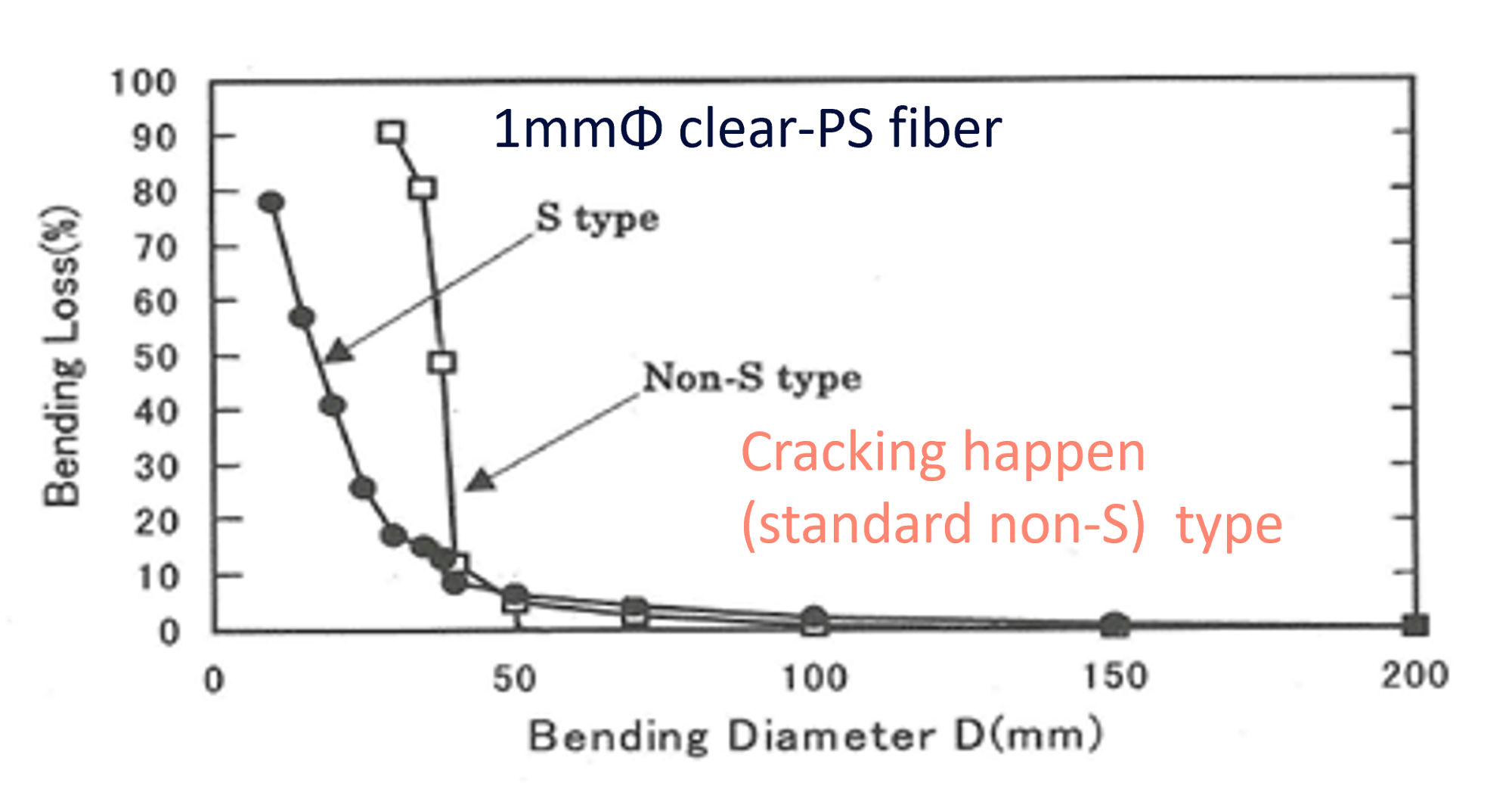
This page shows the optical loss due to fiber bending and the approximate minimum bending diameter. Please compare the difference between S-type/Non-S-type and refer to the handling conditions when designing.
Bending Loss and Mechanical Properties by Fiber Type
Bending loss
- The standard Non-S type cracks (fissures) occur when the bending diameter is small.
- The S type exhibits high stability against bending.
- For use in narrow bending conditions, check the minimum bending diameter guideline.
Point: Bending loss increases with decreasing bending diameter. Since losses increase rapidly in cracked areas, sufficient bending diameter should be maintained when designing.

FIG. 1: Test Method
Minimum Bending Diameter
Recommended minimum bending diameters are shown in the table below to ensure long-term reliability and safety.
The data shown are representative values for comparative study. Values may vary depending on measurement conditions. Not a guaranteed value.
| Type | 2 mmΦ Fiber | 1 mmΦ Fiber | 0.5 mm Φ Fiber |
| S type | 200 mm | 100 mm | 50 mm |
| Non-S type | 400 mm | 200 mm | 100 mm |
/
*) Performance is not guaranteed in these figures.


